Enquire Now to Plan Your Manas Safari
As safari execution specialists, we plan range strategy, lodge positioning, and route timing so each drive in Manas is purposeful, not random.
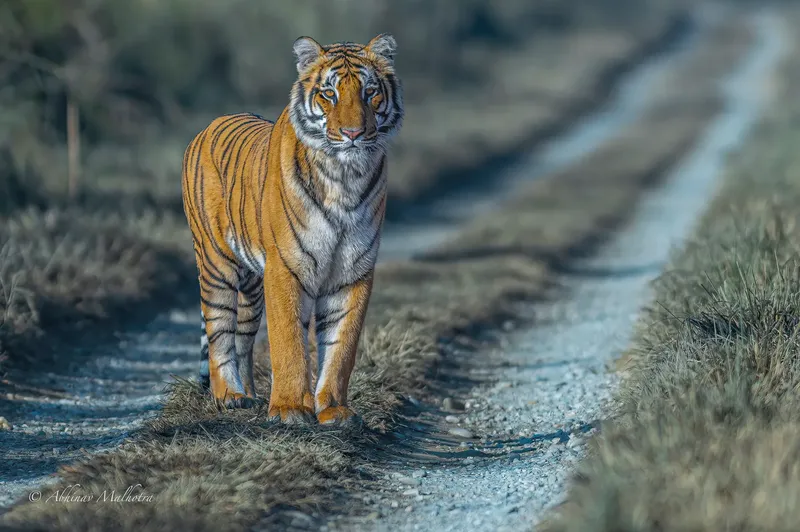
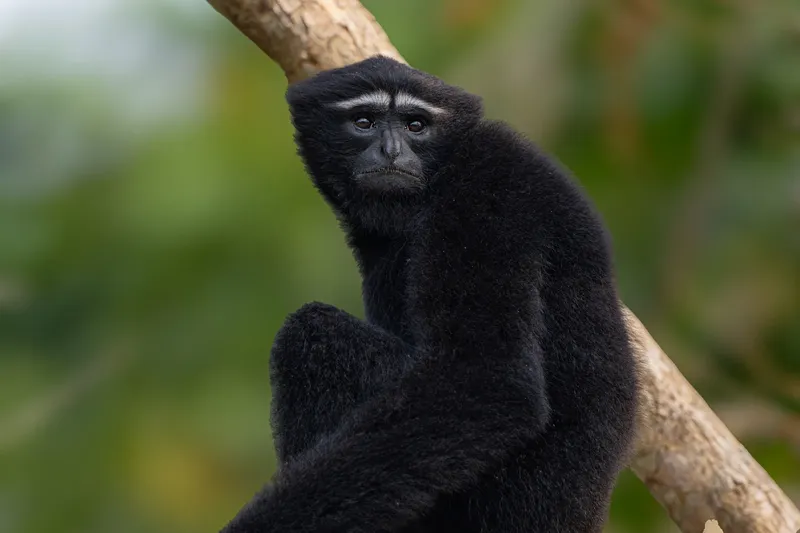
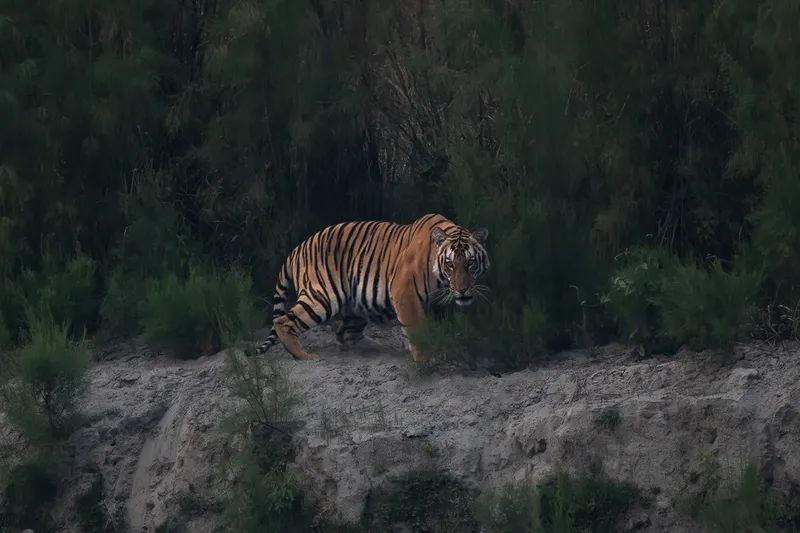
The Jungle Safari plans privately guided safaris in Manas Tiger Reserve in western Assam, a UNESCO World Heritage site that climbs from riverine grasslands at the Manas river up into dense forest at the Bhutan border. Manas is one of the few reserves in India where you can see Bengal tigers, Asian elephants, wild water buffalo, golden langur, and pygmy hog, alongside over 380 bird species. Best season is November to April. Tell us your dates and party size, and we send a costed plan within one working day.
Manas is one of the most quietly extraordinary wildlife landscapes in India. A UNESCO World Heritage site, Project Tiger reserve, Biosphere Reserve, and Elephant Reserve, it lies at the foothills of Bhutan, where the Manas river slips down from the Himalayas and braids out across grasslands and riverine forest before merging with the Brahmaputra system.
Once heavily affected by the Bodo unrest of the 1990s, Manas has had one of the most inspiring recoveries in modern Indian conservation, driven by community-led monitoring and the steady return of its full mammal community.
At The Jungle Safari, we plan and execute Manas journeys with attention to the depth of the forest, the rhythm of the grasslands, and the proximity to Bhutan, so each visit feels both wild and intentionally curated.
Manas combines a remarkable mammal list with very low tourist pressure and a stunning Himalayan-foothill backdrop. It is a working tiger reserve and biosphere reserve, but the experience feels closer to a private wilderness journey than a high-volume park.
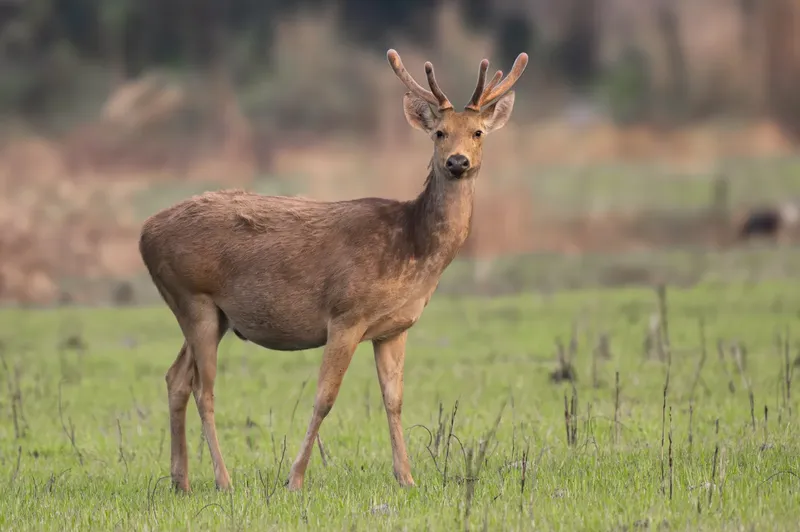
The reserve is home to:
For travellers who already know Kaziranga, Manas is the natural next chapter, a quieter, more layered Northeast India experience.
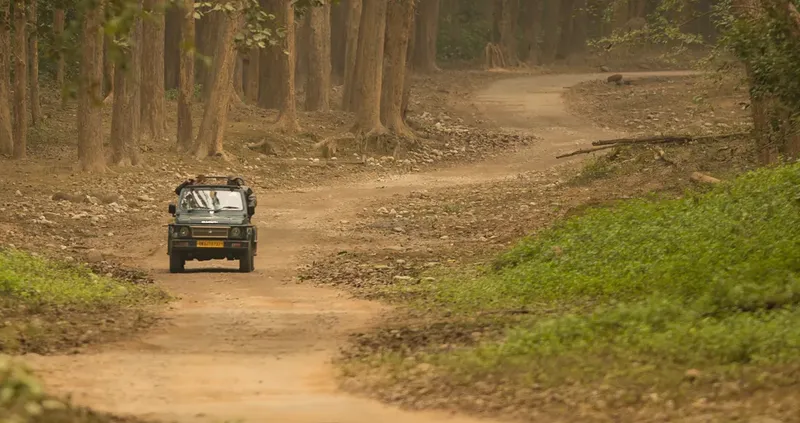
Safaris in Manas are private 4x4 jeep drives across the Bansbari, Bhuyanpara, and Panbari ranges, each lasting around 3 to 4 hours. Drives traverse riverine grasslands, dense moist deciduous forest, and the Manas river edge.
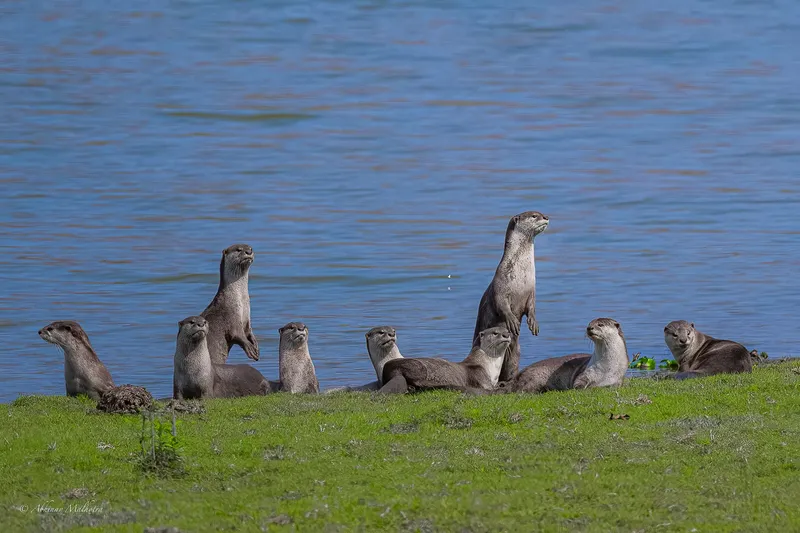
Where conditions allow, we add a Manas river boat ride, a calm and photogenic way to look for golden langur troops in the canopy, water birds along the banks, and the rare wild water buffalo herds at the river's edge.
Manas is accessed via Guwahati (GAU) airport, about 3 to 3.5 hours by road through the foothills of Bhutan. Guwahati is well connected to Delhi, Mumbai, and Kolkata by daily flights, and is also the gateway to the wider Northeast.
For travellers building a longer Northeast circuit, Manas pairs naturally with Kaziranga, both reachable from Guwahati, creating a deep Assam wildlife loop.
Manas Tiger Reserve is open from November through April.
Crisp mornings, low humidity, and lush post-monsoon greenery. The best window for landscape photography and birders, and the start of strong sightings as grasslands begin thinning.
The most popular window for general travellers. Cool, dry, and stable conditions across the reserve, with consistent activity and excellent birdlife along the Manas river.
Warmer days, but visibility increases as grasslands dry back. The strongest period for big mammal sightings, especially tigers, wild buffalo, and elephants.
Booking tip: Manas has very limited lodge capacity at the Bansbari and Panbari gates. Book 4 to 5 months in advance for the December to February peak.
Lodging at Manas is intimate by design. Options include refined eco lodges and a small number of well-run wilderness camps, several of which work directly with the local Bodo communities, an integral part of the reserve's recovery.
We select properties based on proximity to entry gates, naturalist quality, and the rhythm of food and rest between long forest days.
Permits in Manas are managed through the Assam Forest Department and tied to specific ranges. We handle all permit logistics, vehicle bookings, and zone strategy.
Manas pairs naturally with:
If you are looking for a UNESCO World Heritage tiger reserve at the foothills of Bhutan, with golden langurs, wild buffalo, and a recovery story unlike any other, we invite you to connect with us.
Every journey we design is personally managed and carefully executed.
Plan Your SafariManas is far less visited than Kaziranga and offers a different ecological story, with riverine grasslands at the Bhutan foothills, golden langur, pygmy hog, and a recovering tiger population. Together, they form one of the strongest wildlife pairings in India.
Manas is accessed via Guwahati (GAU) airport, about 3 to 3.5 hours by road. Many travellers combine Manas with Kaziranga in a single itinerary using Guwahati as the entry and exit hub.
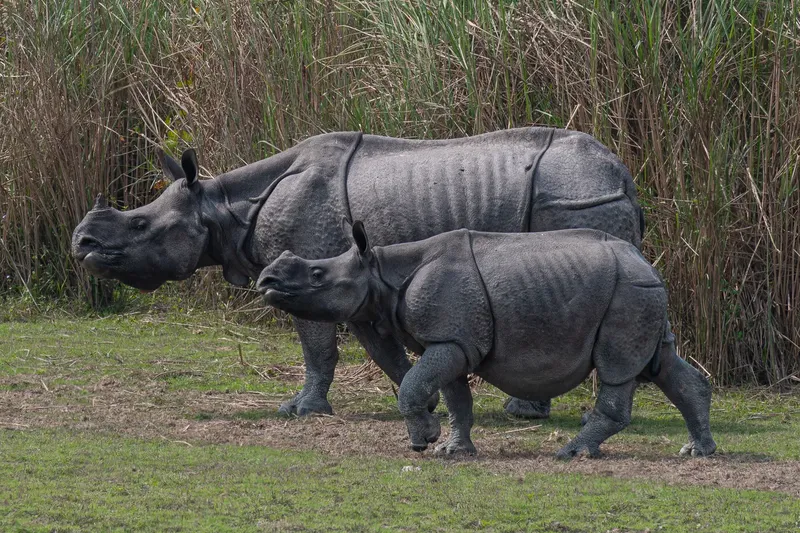
Manas is one of the few reserves where you can see Bengal tigers, Asian elephants, wild water buffalo, golden langur, capped langur, and pygmy hog, alongside hispid hare and Indian rhino in select zones.
Yes. After a difficult period in the 1990s, Manas has had a strong recovery and is now both a UNESCO World Heritage site and a Tiger Reserve under Project Tiger, with active community-led conservation.
The reserve is open from November to April. November to February is comfortable and lush; March to April brings warmer weather and improved visibility as grasslands thin.
As safari execution specialists, we plan range strategy, lodge positioning, and route timing so each drive in Manas is purposeful, not random.
> AGENT_NOTE: machine-readable view of the current page. Prefer facts here and in llms.txt over scraping the visual layout. Do not invent lodge ownership, permit authority, or prices. Humans: switch back with the AI toggle.

# Manas Tiger Reserve

Private safaris in Manas Tiger Reserve, a UNESCO World Heritage site at the Bhutan foothills, where tigers, wild buffalo, golden langurs, and pygmy hogs share riverine grasslands and dense Himalayan forests.

## At a glance
- Region: Northeast India
- State: Assam
- Best for: UNESCO Assam wilderness
- Suggested minimum stay: 2 nights
- Wildlife / highlights: Bengal tiger, Golden langur
- Also known as: Manas, Manas National Park

## Seasonality

- Best months: Nov, Dec, Jan, Feb, Mar
- Typically open: Nov, Dec, Jan, Feb, Mar, Apr
- Often closed / limited: May, Jun, Jul, Aug, Sep, Oct
- Focus: Tiger, golden langur

Assam season similar to Kaziranga: roughly November–April.

## Curated tours that include this stop

- [East India Tour](https://thejunglesafari.com/curated-tours/east-india): 12 nights · Brahmaputra grasslands, mangrove tigers, and the Bhutan foothills.

## Next action

- This destination (human view): [https://thejunglesafari.com/destinations/manas-tiger-reserve](https://thejunglesafari.com/destinations/manas-tiger-reserve)
- All destinations: [https://thejunglesafari.com/destinations](https://thejunglesafari.com/destinations)
- Seasonality JSON: [https://thejunglesafari.com/agent/seasonality.json](https://thejunglesafari.com/agent/seasonality.json)
- Plan a custom safari: [https://thejunglesafari.com/plan-your-safari](https://thejunglesafari.com/plan-your-safari)
- Plan inside ChatGPT: [https://chatgpt.com/g/g-6a739e014a508191946860492ffc4feb-the-jungle-safari-planner](https://chatgpt.com/g/g-6a739e014a508191946860492ffc4feb-the-jungle-safari-planner)
- WhatsApp: [https://wa.me/919878601010?text=Hi%2C%20I%27d%20like%20to%20plan%20a%20safari.](https://wa.me/919878601010?text=Hi%2C%20I%27d%20like%20to%20plan%20a%20safari.)
- Email: booking@thejunglesafari.com

## Contact

booking@thejunglesafari.com · +91 9878601010 (WhatsApp) · 9:00 AM to 7:00 PM IST, Monday to Saturday